The Unwritten Handoff: Capturing What Retiring Colleagues Never Thought to Document
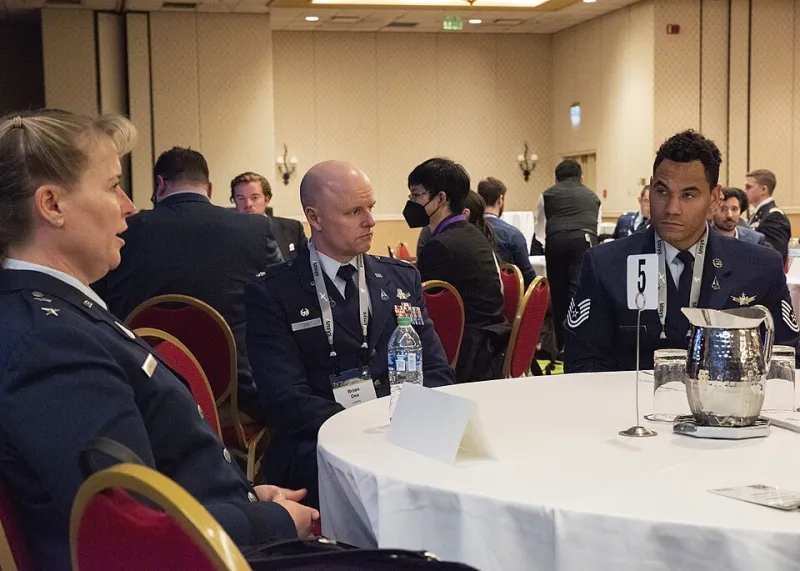
Photo: USSPACECOM photo by Staff Sgt. Wilfredo Acosta, Public domain, via Wikimedia Commons
A senior colleague retires. There is a card, a reception, perhaps a framed token of appreciation. Within ninety days, the desk is reassigned and the projects continue. Within a year, someone encounters a problem that the departed colleague would have resolved in ten minutes and instead spends three weeks reconstructing a solution that already existed.
This is not a failure of documentation. It is a failure of recognizing what was never documentation-eligible in the first place.
Why the Map Never Gets Drawn
The knowledge that leaves with a retiring professional is rarely the knowledge stored in files. Procedures are documented because procedures are repeatable and therefore formalizable. What goes undocumented is the residue: which vendor is reliable under deadline pressure, which client requires a call rather than an email, which exception was granted in 2019 and why, which internal approval can be skipped without consequence and which absolutely cannot.
Experienced practitioners often do not recognize this knowledge as knowledge. It feels like common sense — the accumulated instinct of having been present for a decade of decisions. They do not write it down because it does not occur to them that anyone would need it written down. Successors do not ask because they do not yet know what questions to put.
The result is a predictable and expensive gap, and it widens as more of the workforce reaches retirement age.
What Actually Walks Out the Door
Relationship capital. Not contact lists, which are easy to transfer, but the texture of relationships: who responds quickly, who needs context before committing, who has been burned before and by what.
Decision precedent. The reasoning behind choices that appear arbitrary to anyone who was not in the room — why a particular approach was abandoned, why a policy persists despite being inefficient.
Exception memory. The catalog of times the standard process did not apply, and what was done instead. This is often the single most valuable and least documented asset an experienced professional holds.
Informal influence. Who actually resolves a dispute, whose objection ends a discussion, which department's silence should be read as resistance rather than consent.
Historical context. The reasons a structure exists, which prevents successors from dismantling something load-bearing in an effort to appear decisive.
A Handoff Checklist for Mentors
Departing or senior members preparing to step back should work through a structured inventory rather than relying on memory during a two-week transition.
- Name the five decisions you are most often consulted on, and write out how you approach each one.
- List the exceptions you have granted or seen granted in the past five years, with the reasoning behind each.
- Identify the three relationships that would be hardest to rebuild, and make warm introductions rather than handing over a directory entry.
- Document the unwritten rules, particularly those that would look like inefficiency to someone without context.
- Flag the traps, including any process that appears optional but is not.
- Schedule three sessions across the final quarter, not one meeting in the final week, and assign each session a topic in advance.
- Name a successor for each relationship, not each task.
A Handoff Checklist for Mentees
Successors carry equal responsibility and often fail to exercise it because asking questions feels like an admission of inadequacy. It is not; it is the cheapest form of knowledge transfer available.
- Interview before the announcement, not after. Ask what took the longest to learn, what the role's most common mistake is, and what they would do differently.
- Request artifacts, not summaries. A sample memo, an annotated policy, a marked-up contract teaches more than a verbal description.
- Ask for the exception log, and read it before proposing any process improvement.
- Map the informal network yourself, then validate your map with the departing colleague while they are still reachable.
- Record the answers. Memory of a conversation fades faster than most professionals expect; a written record can be circulated to the next person.
- Establish a standing quarterly contact for the first year after departure, with a defined scope and a light footprint.
What the Association Can Do
Retention of institutional memory is not solely an employer concern. APTK chapters and practice groups are well positioned to capture knowledge that crosses organizational boundaries and would otherwise be lost entirely.
Practical measures include structured exit interviews with departing senior members, recorded practitioner sessions in which experienced members walk through a genuinely difficult decision from their career, and a maintained archive of case-based guidance that newer members can consult. A chapter that hosts one well-run session per quarter, built around a real decision rather than a general topic, builds an asset that no individual employer can replicate.
Starting Before the Announcement
The most common failure in knowledge transfer is timing. Conversations that should begin twelve months before departure begin two weeks before, and what results is a hurried summary rather than a genuine handoff.
Members approaching the later stages of a career should not wait to be asked. Offering a structured transfer is itself a professional contribution, and it is one of the few that compounds for the people who follow. The map is only valuable if it is drawn while the territory is still in view.